


Hallux Rigidus:
Hallux rigidus is a degenerative disease of the metatarsophalangeal joint of the big toe that leads to limited mobility and increasing pain in the area of the big toe. The term “hallux” refers to the big toe, and “rigidus” means “stiff” in Latin. This condition occurs when the joint of the big toe is worn out and bone growths (osteophytes) form that can hinder the movement of the joint. Causes of hallux rigidus can be:
- Overuse of the joint: Long-term overloading of the metatarsophalangeal joint of the big toe through activities such as running, jumping or wearing shoes that are too tight can lead to wear and tear of the articular cartilage.
- Arthritis: A form of arthritis, especially post-traumatic osteoarthritis, can also lead to hallux rigidus. Inflammation in the joint can damage the cartilage and lead to stiffening.
- Genetic predisposition: A genetic predisposition can increase the risk of developing hallux rigidus.
Symptoms get worse over time and affect the quality of life of the sufferer.
Treatment for hallux rigidus can vary depending on the severity of the condition. Treatment options include conservative measures such as wider toe footwear, orthopedic insoles, physical therapy, anti-inflammatory drugs, and injections of steroids. In advanced cases where conservative measures are not sufficient, surgery may be considered to relieve or stabilize the joint, such as joint fusion (arthrodesis) or joint replacement (endoprosthesis).
Diagnostics:
The diagnosis of hallux rigidus is usually based on a combination of medical history, physical examination, and imaging techniques. Here are the typical steps to make a diagnosis:
- Medical history: The doctor will talk to the patient about their symptoms, especially pain in the metatarsophalangeal joint of the big toe, stiffness and restrictions on movement.
- Physical examination: The doctor will closely examine the affected foot and big toe to identify swelling, redness, deformities, or other noticeable signs. They will also test the mobility of the big toe to determine if there is limited mobility.
- Imaging techniques:
- X-rays: X-rays are obligatory to visualize the structural changes in the metatarsophalangeal joint of the big toe. They can show if there are any bone growths (osteophytes), if the joint space is narrowed, and if there are signs of arthritis or other conditions.
- Occasionally, more advanced imaging techniques such as magnetic resonance imaging (MRI) or computed tomography (CT) may also be used to provide a more detailed representation of the joint structures, especially if the diagnosis is inconclusive or if a more detailed assessment is required.
- Rule out other causes: The doctor may also want to rule out other conditions that can cause similar symptoms, such as gout, rheumatoid arthritis, or other forms of arthritis.
Therapy:
The treatment of hallux rigidus can vary depending on the severity of the disease and the individual needs of the patient. Here are some commonly used treatment options:
- Conservative measures:
- Footwear: Wearing shoes with a wide toe box can reduce pressure on the metatarsophalangeal joint of the big toe and relieve discomfort. Avoid tight or pointed shoes, which could put extra pressure on the toe.
- Orthopaedic insoles: Special insoles with a so-called “rigidus spring” can help to distribute the pressure on the metatarsophalangeal joint of the big toe and reduce the load.
- Medications: Anti-inflammatory drugs such as nonsteroidal anti-inflammatory drugs (NSAIDs) can relieve pain and inflammation.
- Physiotherapy: Targeted exercises and mobilization techniques can improve the mobility of the big toe and strengthen the surrounding muscles.
- The injection:
- Corticosteroid injections: An injection of corticosteroids directly into the affected joint can temporarily relieve pain and inflammation.
- Hyaluronic acid injections: Hyaluronic acid can serve as a lubricant and improve joint mobility.
- Stem cell injections PRP/ACP can regenerate the damaged cartilage areas.
- Surgical Options
- See surgical techniques in the text.
The choice of therapy depends on several factors, including the severity of the condition,
Surgical technique:
There are several surgical options for treating hallux rigidus, depending on the severity of the condition and the individual needs of the patient. Here are some commonly used surgical methods:
- Cheilectomy: In this operation, the excess bone on the metatarsophalangeal joint of the big toe is removed to remove excess bone growths (osteophytes) and to widen the joint space. This can help relieve pain and improve the mobility of the big toe.
- Arthrodesis/fusion (joint fusion): In this operation, the metatarsophalangeal joint of the big toe is fixed by fusing the bones together. This eliminates the mobility of the joint, resulting in significant pain relief. Although the mobility of the big toe is restricted, the patient can still use the foot normally and roll off painlessly
- Joint replacement (endoprosthesis): In some cases, surgery to implant an artificial joint replacement prosthesis may be considered. In this procedure, the damaged joint is removed and replaced by a prosthesis. This allows the patient to maintain the mobility of the big toe.
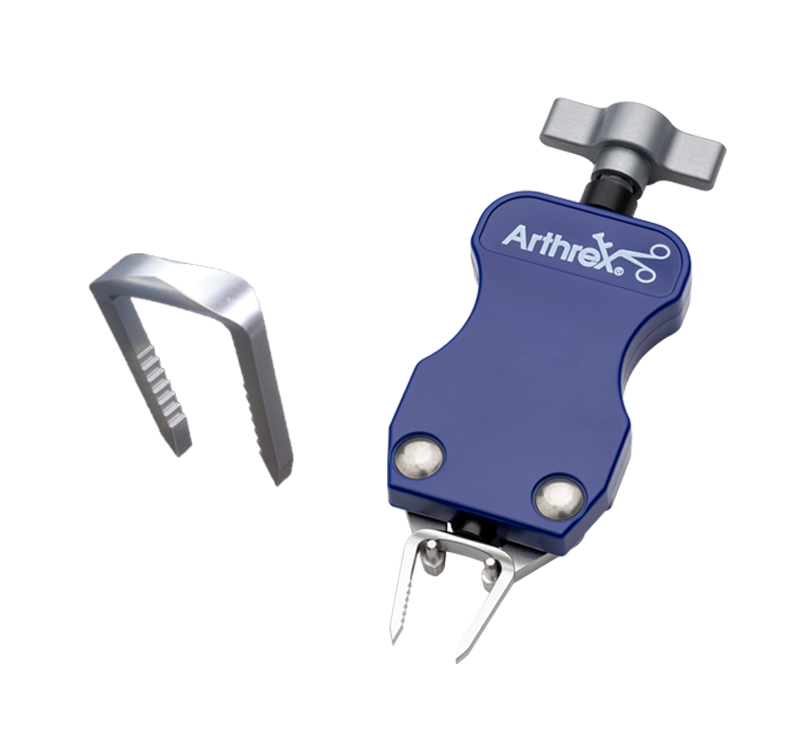
Can I roll my foot again after the operation? and which implants are used?
Yes! The toe is stiffened at approx. 10-15° extension, so that a rolling movement is possible without any problems.
.I only use joint clamps (clips) from Arthrex. These are by far the best and most stable implants, but also the most expensive! No screw and no plates

Aftercare:
Full loading of the heel and relief of the forefoot in the forefoot relief shoe for 6 weeks